Front-End Collision Damage: What Can Be Damaged Besides the Bumper?
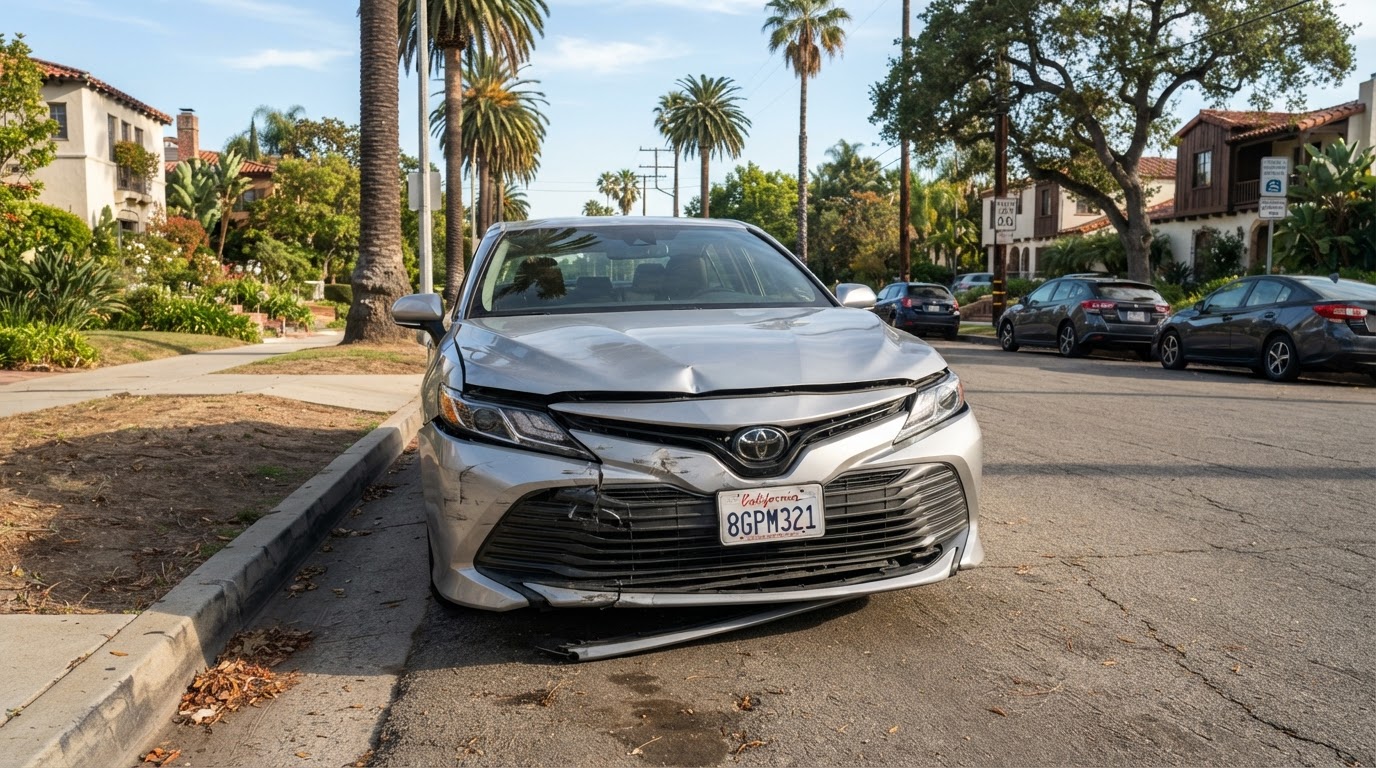
A damaged front bumper may be the most obvious sign of a front-end collision, but it isn't necessarily the only damaged component. Depending on where and how the vehicle was hit, the impact can also affect components behind the bumper, headlights, hood, cooling components, mounting points, suspension-related components, electronics, or structural areas.
This does not mean every front-end accident causes all of these problems. Damage depends on the individual collision and vehicle. The vehicle must be assessed to determine what actually needs repair.
What Can Be Damaged in a Front-End Collision?
Depending on the vehicle and the point of impact, a front-end collision can potentially affect:
- Bumper cover
- Bumper reinforcement / energy-absorbing components
- Grille
- Headlights
- Hood and hood latch area
- Fenders
- Radiator / cooling-related components
- A/C condenser
- Cooling fans
- Structural supports / front structural areas
- Wheel, steering, or suspension-related components depending on impact
- Wiring / electronics
- Parking sensors, cameras, or radar equipment where equipped
Not every vehicle contains the same components or sensor arrangement, and not all of these items must be replaced after an accident. The actual repair requirements depend on what the inspection reveals.
Front Bumper Damage Can Be More Than Cosmetic
What drivers casually call "the bumper" includes more than the painted exterior bumper cover. Behind that cover sits a layered structure:
The visible cover can conceal the condition of components behind it. A bumper cover that looks repairable does not tell you whether the reinforcement, brackets, or mounting areas behind it were also affected. For more on bumper-specific repairs, see our Bumper Repair page. The bumper does not automatically need replacement — that decision depends on what the inspection reveals.
Can a Front-End Collision Damage the Radiator?
Cooling-system components are located toward the front of many vehicles and can potentially be affected by a frontal impact. Possible warning signs after a collision can include:
- Coolant visible under the vehicle
- Rising engine temperature
- Overheating warning
- Damaged cooling components visible through the grille
- Unusual fan operation
- New warning indicators
Do not continue driving an overheating vehicle.
Continuing to operate an overheating engine can potentially cause additional mechanical damage. If your temperature gauge is climbing or an overheating warning appears after a collision, stop and have the vehicle assessed or transported. A radiator failure cannot be diagnosed from a leak alone.
Why Is My Car Leaking Fluid After a Front-End Accident?
Different fluids come from different vehicle systems, and the cause depends on the vehicle and the impact. Do not attempt to identify unknown fluid by touching or tasting it. A visible fluid leak after a collision should be treated as a reason to stop and determine what was damaged before continuing to drive. A definitive diagnosis cannot be made online.
Can the A/C Condenser Be Damaged in a Front-End Collision?
The condenser is located toward the front of many vehicles and may be vulnerable depending on the impact location. Possible symptoms can include the A/C stopping cooling after the accident, visible front-end damage, or damage discovered after bumper or grille removal. Do not attempt to handle refrigerant yourself, and do not diagnose an A/C leak online.
Can a Front-End Collision Cause Frame or Structural Damage?
Yes, depending on impact severity and location — but a damaged bumper does not automatically mean structural damage occurred. Many modern passenger vehicles use unibody construction, so "frame damage" is often used casually when "structural damage" may be more accurate.
Possible reasons a shop may investigate structure include:
- Significant front impact
- Altered panel alignment
- Hood or fender gaps that changed
- Wheel position that appears different
- Structural components visibly deformed
- Measurements that indicate something is out of specification
Structural damage cannot be diagnosed from panel gaps alone. Learn more on our Collision Repair page.
How Does a Body Shop Check for Structural Damage?
The process generally follows this sequence:
Corner Collision Center uses computerized measuring to help identify structural issues accurately. Equipment and capabilities should be confirmed based on the current repair requirements for your vehicle.
Can a Front-End Collision Damage Suspension or Steering?
Impacts involving the front corner, wheel, or surrounding area may potentially affect steering or suspension-related components. Possible symptoms include:
- Vehicle pulls
- Steering wheel position changed
- Unusual vibration
- Wheel or tire position looks abnormal
- New steering noise
- Vehicle no longer tracks normally
An alignment cannot correct a physically damaged steering or suspension component. The underlying cause should be assessed first rather than assuming an alignment alone will fix the problem.
Why Doesn't My Hood Close Correctly After the Accident?
A collision can potentially affect the hood, hinges, latch, surrounding panels, mounting areas, or underlying supports. Do not repeatedly slam or force a hood that will not latch correctly. If the hood cannot be securely latched, driving the vehicle can present a serious risk.
Can Headlights Be Damaged Even If the Lens Isn't Broken?
Yes. Damage can potentially involve mounting tabs, the housing, wiring, alignment, moisture sealing, or electronic components depending on the headlight design. Not every headlight involved in a collision requires replacement — the decision depends on what the inspection reveals.
What About Cameras, Radar and Parking Sensors?
Modern vehicles may have electronic equipment in or near the front bumper, grille, windshield, or other areas. Depending on the vehicle, this can include parking sensors, forward radar, cameras, or related wiring and modules.
Damage, removal, or replacement of certain components may create manufacturer-specified diagnostic or calibration requirements. Not every accident requires ADAS calibration, and not every bumper replacement requires calibration. Requirements depend on the vehicle, the equipment, the component, the repair operation, and the manufacturer's procedure.
Can Airbags Deploy in a Front-End Collision?
Airbag deployment depends on crash conditions and the vehicle's restraint system. There is no universal impact-speed threshold. If airbags deployed, they are single-use safety devices and require appropriate replacement after a crash. Do not drive a vehicle with deployed airbags. For more on post-accident safety, read Is My Car Safe to Drive After an Accident?
My Car Still Drives. Does That Mean the Front-End Damage Is Minor?
No. Drivable does not automatically mean minor damage — but it also does not automatically mean severe damage. Vehicle operation alone cannot establish the full repair requirements. A vehicle can move while still having body damage, damaged mounting components, cooling-system issues, alignment or suspension issues, structural damage, or electronic and sensor issues depending on the collision.
10 Warning Signs to Pay Attention to After a Front-End Collision
- Fluid leaking
- Engine temperature increasing
- Hood will not latch properly
- Headlight or required lighting doesn't work
- Wheel or tire visibly damaged
- Vehicle pulls or steering changed
- Loose or dragging body components
- New warning lights
- Unusual vibration or noise
- Significant panel or structural misalignment
These signs do not diagnose the problem. They indicate that further assessment may be appropriate.
Can There Be Hidden Damage Even If the Accident Looked Minor?
The California Bureau of Automotive Repair specifically recognizes that collision damage may contain hidden issues that cannot readily be identified through visual inspection. Exterior components may obscure brackets, supports, reinforcement components, wiring, mounting points, cooling components, or structural areas depending on the collision. Hidden damage does not always exist, but the possibility depends on the impact and the vehicle.
What Is Collision Teardown?
A teardown, or disassembly, may involve removing damaged or surrounding components so the repair facility can identify the extent of collision damage. Current California BAR guidance explains that a collision teardown estimate involves disassembly to determine the extent of damage and generation of an itemized repair estimate. California's updated teardown disclosure requirements took effect July 1, 2025.
Before a shop performs a teardown for diagnosis, specific estimate, disclosure, and customer-authorization requirements apply. Teardown is not required for every estimate.
Why Did My Repair Estimate Increase After Teardown?
An estimate changing does not automatically mean the original estimator made a mistake, the body shop is overcharging, or insurance intentionally underestimated the claim. Sometimes additional information simply becomes available after disassembly. For more, read Insurance Estimate Lower Than the Body Shop Estimate? Here's What Happens Next and Why Is Insurance Taking So Long to Approve My Car Repair?.
Will Insurance Pay for Hidden Front-End Damage?
Coverage depends on applicable policy and coverage, liability, whether the damage relates to the covered accident, documentation, and insurer review. When additional accident-related damage is identified, the repair facility may document it and submit supplemental repair information. Payment or approval is not guaranteed.
Is My Car Totaled If the Front-End Damage Is Severe?
Visual severity alone does not determine total loss. The insurer's total-loss determination generally considers factors involving repair cost and vehicle value under the applicable claim methodology. There is no universal California percentage. For more, read Is My Car Totaled or Repairable After an Accident?
Should I Drive My Car After a Front-End Collision?
An online article cannot make a safety determination for a specific vehicle. Driving can be inappropriate when there are issues involving overheating, a significant fluid leak, steering, braking, wheel or tire damage, loose body components, a hood that cannot latch, damaged required lighting, deployed airbags, impaired visibility, significant warning indicators, or anything affecting normal control of the vehicle.
When uncertain, the safer practical option may be to have the vehicle assessed or transported rather than driving it. See Is My Car Safe to Drive After an Accident?
What Should I Tell the Collision Repair Shop?
Tell the shop about anything that changed immediately after the collision:
- Overheating
- Fluid leak
- Warning light
- Steering change
- Vibration
- Unusual sound
- A/C stopped working
- Hood problem
- Lighting problem
- Sensor or camera warning
- Previous damage in the same area
Useful documents, when available, include accident photos, an insurance estimate, a claim number, and insurer information. Not every item is mandatory.
Front-End Collision Repair in Gardena, CA
If your vehicle was hit in the front in Gardena or the surrounding South Bay or Los Angeles area, Corner Collision Center can assess the collision damage and explain the repair requirements for your vehicle.
Corner Collision Center
1311 W 130th St Unit 7
Gardena, CA 90247
Phone: (310) 678-5596
BAR ID: ARD 312893
Relevant services include collision repair, bumper repair, fender repair, structural and frame repair, panel replacement, paint matching and refinishing, and insurance claim assistance. Corner Collision Center's I-CAR-certified technicians and computerized structural measuring help identify damage accurately, and qualifying repairs are backed by a lifetime warranty.
Front-End Damage That Goes Beyond the Bumper?
If your vehicle was hit in the front, the visible bumper or hood damage may not tell you everything that needs repair. Corner Collision Center can assess the collision damage and explain the repair requirements for your vehicle.
Request a Free EstimateFrequently Asked Questions
What can be damaged in a front-end collision?
Depending on the vehicle and impact, a front-end collision can potentially affect the bumper cover, bumper reinforcement, grille, headlights, hood, fenders, radiator and cooling components, A/C condenser, structural supports, steering or suspension-related components, wiring, and parking sensors, cameras, or radar equipment. Not every component is damaged in every collision — the vehicle must be assessed to determine what actually needs repair.
Can a front-end collision cause hidden damage?
Yes. The California Bureau of Automotive Repair recognizes that collision damage can include hidden issues that cannot readily be identified through visual inspection. Components behind the bumper cover, grille, or exterior panels may be affected even when the outside damage appears limited.
Can a minor front-end accident damage the radiator?
It is possible. Cooling-system components are located toward the front of many vehicles and can potentially be affected by a frontal impact, even one that looks minor. Coolant visible under the vehicle, rising engine temperature, or an overheating warning are reasons to stop and have the vehicle assessed before continuing to drive.
Why is my car leaking coolant after an accident?
A front-end impact can potentially damage cooling-related components. A visible fluid leak after a collision should be treated as a reason to stop and determine what was damaged before continuing to drive. Do not attempt to identify unknown fluid by touching or tasting it.
Can I drive with a damaged radiator after an accident?
Continuing to operate an overheating engine can potentially cause additional mechanical damage. If your vehicle is overheating, leaking coolant, or showing temperature warnings after a collision, the safer option may be to have it assessed or transported rather than driving it.
Why is my car overheating after a collision?
Overheating after a front-end collision can be a sign that cooling-related components were affected. This should be treated seriously. Continuing to drive an overheating vehicle can potentially cause additional mechanical damage.
Can a front-end collision cause frame damage?
It can, depending on the severity and location of the impact, but a damaged bumper does not automatically mean structural damage occurred. Many modern vehicles use unibody construction, so 'structural damage' is often more accurate than 'frame damage.' A professional assessment is needed to determine whether structure was affected.
How can a body shop check for structural damage?
A shop may perform a visual assessment, gain access to the damaged area, take structural measurements where appropriate, compare them with applicable specifications, and determine repair requirements. Structural damage cannot be reliably diagnosed from panel gaps alone.
Can a front-end collision affect wheel alignment?
Impacts involving the front corner, wheel, or surrounding area may potentially affect steering or suspension-related components. Signs such as pulling, a steering wheel that is no longer centered, or unusual vibration should be investigated. An alignment cannot correct a physically damaged component.
Can suspension be damaged in a front-end accident?
Depending on the impact, steering or suspension-related components may be affected. Warning signs can include pulling, a changed steering wheel position, unusual vibration, or a wheel that looks abnormal. The underlying cause should be assessed rather than assuming an alignment alone will fix it.
Why won't my hood close after a collision?
A collision can potentially affect the hood, hinges, latch, surrounding panels, mounting areas, or underlying supports. Do not repeatedly slam or force a hood that will not latch correctly. If the hood cannot be securely latched, driving the vehicle can present a serious risk.
Can a headlight be damaged without a broken lens?
Yes. Damage can potentially involve mounting tabs, the housing, wiring, alignment, moisture sealing, or electronic components depending on the headlight design. Not every headlight involved in a collision requires replacement.
Can a front-end collision damage parking sensors or radar?
Many modern vehicles have electronic equipment in or near the front bumper, grille, or surrounding areas. Depending on the vehicle and impact, parking sensors, forward radar, cameras, or related wiring and modules may be affected.
Does a front-end collision require ADAS calibration?
Not necessarily. Requirements depend on the vehicle, the equipment, the component, the repair operation, and the manufacturer's procedure. Not every accident requires ADAS calibration, and not every bumper replacement requires calibration. Vehicle-specific manufacturer procedures determine what is required.
Does airbag deployment mean my car is totaled?
No. Airbag deployment does not automatically mean a vehicle is a total loss. Deployed restraint-system components add to the repair requirements and cost, and those costs become part of the overall evaluation, but deployment alone does not determine the total-loss decision.
Can I drive my car after a front-end collision?
An online article cannot determine whether a specific damaged vehicle is safe to drive. Driving may be inappropriate when there are issues involving overheating, significant fluid leaks, steering, braking, wheel or tire damage, loose body components, a hood that cannot latch, damaged required lighting, deployed airbags, or anything affecting normal control of the vehicle.
Why did my body shop estimate increase after teardown?
After disassembly, additional accident-related damage may become visible that was not included in the initial visual estimate. The repair plan is then updated and a supplement or additional estimate is documented for insurer review where applicable. An estimate changing does not automatically mean the original estimator made a mistake.
Will insurance cover hidden collision damage?
Whether an insurer pays depends on applicable coverage, liability, whether the damage relates to the covered accident, documentation, and insurer review. When additional accident-related damage is identified, the repair facility may document it and submit supplemental repair information, but payment is not guaranteed.
Should I get my car inspected after a minor front-end collision?
Visible appearance alone cannot establish that there is no collision damage. An assessment is particularly reasonable when the vehicle behaves differently, warning lights appear, panel alignment changed, fluids are leaking, or you simply cannot determine the extent of the impact.
Where can I get front-end collision repair in Gardena?
Corner Collision Center, located at 1311 W 130th St Unit 7, Gardena, CA 90247, can assess front-end collision damage and explain the repair requirements. Contact the shop at (310) 678-5596 to request an estimate.