Rear-Ended in California? Hidden Damage to Check Before Repairing Your Car
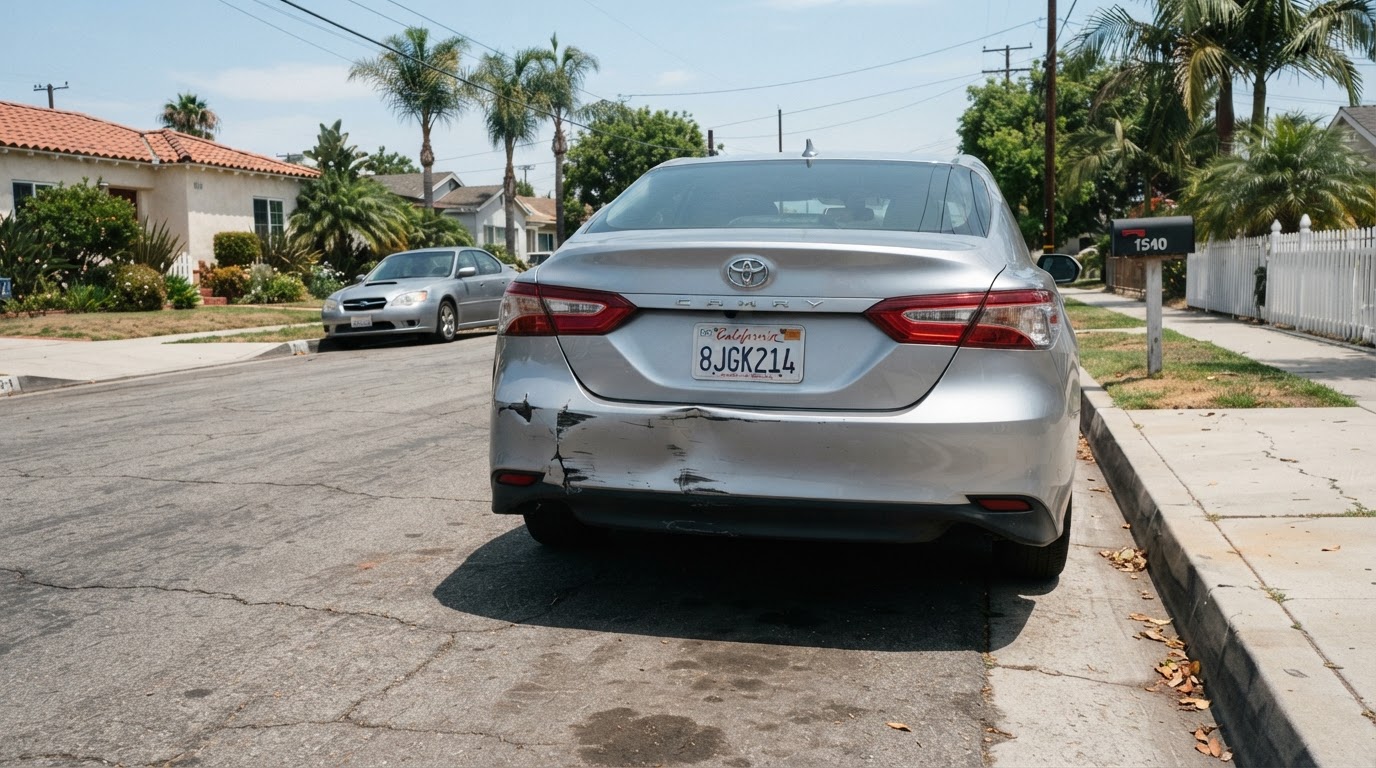
A rear-end collision can cause more damage than the bumper cover shows. The outside of the bumper may have only scratches or a small dent while components behind it, mounting points, adjacent panels, or other parts have also been affected.
This does not mean every rear-end collision causes hidden or structural damage. The actual extent of damage depends on the specific impact and the vehicle. But a visual check alone may not reveal the complete repair requirements.
What Damage Can Happen When Your Car Is Rear-Ended?
Depending on the vehicle and the point of impact, possible damage can include:
- Bumper cover
- Bumper reinforcement and related components
- Mounting components and brackets
- Rear body panels and quarter panels
- Trunk or hatch area
- Lighting (taillights, reflectors)
- Exhaust components
- Suspension or wheel-related components, depending on the impact
- Structural areas
- Parking sensors, cameras, or other electronics where equipped
Not all of these components are damaged in every rear-end collision. The vehicle needs to be assessed to determine what actually occurred.
8 Signs of Hidden Damage After a Rear-End Collision
Any of the following changes after a rear-end collision can justify having the affected area assessed. None of them diagnose a specific damaged component on their own.
1. Bumper gaps or a bumper that no longer sits correctly
Gaps that appeared or changed after the impact can indicate that mounting points, reinforcement, or adjacent panels shifted.
2. Trunk or hatch does not open or close normally
A trunk or hatch that stopped aligning correctly after the collision is a reason to have the affected area assessed.
3. New gaps between body panels
Panel alignment that changed after the impact can reflect movement in the affected structure or mounting areas.
4. Vehicle pulls or tracks differently
If the vehicle no longer drives straight or tracks differently after the collision, wheel, suspension, or structural-related components may warrant inspection.
5. New vibration or unusual noise
Vibration, rattling, or noise that began after the collision may be connected to components affected by the impact.
6. Parking sensors, cameras, or warning indicators behave differently
New warning lights or changes in sensor or camera behavior can signal systems that require diagnosis.
7. Exhaust noise, movement, or visible damage
Exhaust components that moved, rub, or sound different after the collision should be investigated.
8. Fluid leak, rubbing component, or another obvious change
Any obvious change in the vehicle's condition that appeared after the impact is useful information for the collision repair facility.
I Was Rear-Ended but There Is No Visible Damage. Should I Still Get It Checked?
Visible appearance alone cannot establish that there is no collision damage. Bumper covers and exterior panels can obscure components underneath. The California Bureau of Automotive Repair (BAR) explains that collision damage can include hidden issues that cannot readily be identified through visual inspection.
This does not mean hidden damage definitely exists in every collision. But an assessment is particularly reasonable when the vehicle behaves differently, warning lights appear, panel alignment changed, or you simply cannot determine the extent of the impact.
Can a Low-Speed Rear-End Collision Cause Hidden Damage?
Yes, it is possible for an impact that appears minor to affect components behind the visible exterior. Damage depends on vehicle design, the point of impact, impact characteristics, vehicle heights, existing condition, and the components in the affected area.
Avoid assuming a specific speed threshold automatically means the vehicle is or is not damaged. There is no universal speed below which collision damage is impossible.
Is It Just Bumper Damage?
What drivers casually call "the bumper" includes more than the painted exterior bumper cover. A simplified view of the area looks like this:
An exterior bumper cover may sometimes be repairable while components behind it require separate attention — or the opposite may be true. A repair vs. replacement decision requires inspecting the vehicle. Learn more about our bumper repair services.
Can a Rear-End Collision Cause Frame or Structural Damage?
It can, depending on the severity and location of the impact, but rear-ending does not automatically mean structural damage occurred. There is a difference between cosmetic damage and structural damage. Many modern vehicles use unibody construction, so "structural damage" is often a more accurate term than "frame damage."
Indicators that justify professional assessment can include abnormal panel alignment, trunk or hatch fit changes, visible deformation, wheel or suspension changes, or significant impact damage. These signs do not diagnose structural damage by themselves — they indicate that the area should be inspected. Learn more about our collision and structural repair services.
Can Being Rear-Ended Affect My Alignment?
A rear impact does not automatically mean the vehicle needs an alignment. However, depending on the collision, wheel or suspension-related components may be affected. Signs such as pulling, a steering wheel that is no longer centered, unusual tire behavior, or a vehicle that tracks differently should be investigated. An alignment alone will not correct collision-related suspension damage — the underlying damage needs to be identified first.
Why Won't My Trunk Close After Being Rear-Ended?
After a rear collision, trunk or hatch operation can potentially be affected by panel movement, latch alignment, adjacent body damage, or deformation in the affected area. Do not force the trunk closed. A trunk or hatch that changed behavior immediately after the collision is useful information to share with the collision repair facility.
Can a Rear-End Collision Damage Parking Sensors or Cameras?
Many modern vehicles have technology in or near rear collision areas, including parking sensors, backup cameras, radar-related equipment, or wiring for driver-assistance systems. Not every car has these systems, and not every rear-end collision requires ADAS calibration.
Requirements depend on the vehicle, the equipment, the damage, the components removed or replaced, and the manufacturer's repair procedures. Vehicle-specific claims should be based on manufacturer information.
Can a Rear-End Collision Damage the Exhaust?
Exhaust components extend toward the rear of many vehicles. Depending on the location and severity of the impact, damage could potentially affect exhaust-related components. Reasons to stop and investigate include unusual exhaust noise, visibly displaced components, scraping, new vibration, or an exhaust smell where it should not normally be noticed. Exhaust leaks should not be diagnosed online.
Can I Drive My Car After Being Rear-Ended?
An online article cannot determine whether your specific damaged vehicle is safe to drive. Driving may be inappropriate when there are issues involving wheel or tire damage, steering, braking, significant fluid leaks, loose or dragging body components, required lighting, impaired visibility, major warning indicators, obvious structural deformation, or anything interfering with normal vehicle control.
If you are uncertain, having the vehicle assessed or transported rather than driving it can be appropriate. For more guidance, read our article on whether your car is safe to drive after an accident.
Should I Get a Collision Estimate After Being Rear-Ended?
An estimate helps identify the apparent repair requirements and expected repair cost. However, an initial visual estimate may not always identify every concealed issue. California BAR specifically recognizes that collision repairs can involve hidden damage and that disassembly (teardown) may sometimes be needed to determine the full extent.
When a California repair shop performs a teardown for diagnosis, specific estimate and disclosure requirements apply. Under current BAR guidance:
- A teardown estimate is required before diagnostic disassembly.
- The customer must authorize the teardown.
- After teardown, an itemized repair estimate is required.
- Further repair or reassembly requires customer authorization.
Verify current BAR requirements before authorizing any teardown. These rules help protect you as the vehicle owner.
What Happens If Hidden Damage Is Found After Insurance Already Wrote an Estimate?
The supplement process typically works like this:
Approval of any supplement is not guaranteed. California BAR requires customer authorization for additional repairs, even when an insurance company is involved. The vehicle owner — not the insurance company — remains the repair shop's customer for repair authorization purposes. Learn more in our article on what happens when the insurance estimate is lower than the body shop estimate.
Will Insurance Pay for Hidden Damage After a Rear-End Accident?
Whether an insurer pays depends on applicable coverage, liability, whether the damage is related to the covered collision, documentation, policy terms, and insurer review. Repair facilities commonly document additional accident-related damage when it becomes apparent and communicate relevant repair information to the insurer. Payment is not guaranteed and depends on the individual claim.
What If the Other Driver's Insurance Already Sent Me Money?
An initial payment or estimate does not necessarily establish the complete physical repair requirements if additional collision-related damage later becomes apparent. Understand what the payment represents. If you have signed a release or final settlement agreement, review what you agreed to and obtain appropriate professional guidance if necessary. This is not legal advice about settlements, and you are not automatically entitled to additional money.
Do I Have to Use the Body Shop the Insurance Company Recommends?
No. The California Department of Insurance states that under Insurance Code §758.5 an insurer cannot require the automobile to be repaired at a specific repair shop. An insurer may recommend a shop under applicable conditions, but a recommendation is not a requirement. California consumers can select their repair facility. For more detail, read our article on choosing your own body shop after an accident in California.
What Should I Tell the Body Shop After a Rear-End Collision?
Tell the repair facility about anything that changed immediately after the collision, such as:
- Trunk or hatch operation
- Warning lights
- Sensor behavior
- Steering feel
- Vibration
- Noise
- Exhaust sound
- Panel alignment
- Wheel or tire behavior
- Fluid leaks
- Previous damage in the same area
Also bring, where available, the insurance estimate, claim number, accident photos, and other relevant claim information. Not every item is mandatory.
Rear-End Collision Repair in Gardena, CA
If your vehicle was rear-ended in Gardena or the surrounding South Bay or Los Angeles area, Corner Collision Center can assess the visible collision damage and determine what repair work appears necessary. We are located at 1311 W 130th St Unit 7, Gardena, CA 90247, and can be reached at (310) 678-5596.
Relevant services may include collision repair, bumper repair, fender and body repair, structural and frame repair, paint matching and refinishing, and insurance claim assistance. Our I-CAR certified technicians use computerized frame measuring equipment, and we provide a written lifetime warranty on qualifying collision repairs. Corner Collision Center does not determine fault or guarantee insurance coverage.
Rear-Ended and Not Sure How Much Damage There Is?
A damaged bumper doesn't always show the full extent of a rear-end collision. If your vehicle was hit from behind, Corner Collision Center can assess the collision damage and explain the repair requirements.
Request a Free EstimateFrequently Asked Questions
What damage should I check for after being rear-ended?
Depending on the vehicle and impact, possible damage can include the bumper cover, bumper reinforcement and mounting components, rear body or quarter panels, the trunk or hatch area, lighting, exhaust components, suspension or wheel-related parts, structural areas, and parking sensors or cameras where equipped. The vehicle should be assessed to determine what actually occurred.
Can a rear-end collision cause hidden damage?
Yes. The California Bureau of Automotive Repair explains that collision damage can include hidden issues that cannot readily be identified through visual inspection. A bumper cover or exterior panel can conceal components that were affected by the impact. Hidden damage does not occur in every collision, but appearance alone cannot confirm there is none.
I was rear-ended but see no damage. Should I get my car checked?
Visible appearance alone cannot establish that there is no collision damage. An assessment is particularly reasonable when the vehicle behaves differently, warning lights appear, panel alignment changed, or you cannot determine the extent of the impact. An online article cannot verify that a specific damaged vehicle has no underlying issues.
Can a low-speed rear-end collision damage a car?
Yes, it is possible for an impact that appears minor to affect components behind the visible exterior. Damage depends on vehicle design, the point of impact, impact characteristics, vehicle heights, existing condition, and the components in the affected area. There is no universal speed below which collision damage is impossible.
Can being rear-ended damage the frame?
It can, depending on the severity and location of the impact, but rear-ending does not automatically mean structural or frame damage occurred. Many modern vehicles use unibody construction, so 'structural damage' is often a more accurate term. Indicators such as panel alignment changes, trunk or hatch fit changes, or wheel and suspension changes justify professional assessment.
How do I know if my bumper has hidden damage?
Signs that justify assessment include bumper gaps or a bumper that no longer sits correctly, new gaps between body panels, a trunk or hatch that does not operate normally, new vibration or noise, or changes in sensor behavior. These signs do not diagnose a specific damaged component, but they indicate the area should be inspected.
Why won't my trunk close after being rear-ended?
After a rear collision, trunk or hatch operation can be affected by panel movement, latch alignment, adjacent body damage, or deformation in the affected area. Do not force the trunk closed. A trunk or hatch that changed behavior immediately after the collision is useful information to share with the collision repair facility.
Can a rear-end collision affect wheel alignment?
A rear impact does not automatically mean the vehicle needs an alignment, but depending on the collision, wheel or suspension-related components may be affected. Signs such as pulling, a steering wheel that is no longer centered, or a vehicle that tracks differently should be investigated. An alignment alone will not correct collision-related suspension damage.
Can a rear-end accident damage the exhaust?
Exhaust components extend toward the rear of many vehicles, and depending on the location and severity of impact, damage could potentially affect exhaust-related components. Reasons to investigate include unusual exhaust noise, visibly displaced components, scraping, new vibration, or an exhaust smell where it should not normally be noticed.
Can being rear-ended damage parking sensors?
Many modern vehicles have parking sensors, backup cameras, radar-related equipment, or wiring in or near rear collision areas. Whether damage occurred and whether calibration is required depends on the vehicle, the equipment, the damage, the components removed or replaced, and the manufacturer's repair procedures.
Does a rear-end collision require ADAS calibration?
Not every rear-end collision requires ADAS calibration. Requirements depend on the vehicle, the equipment installed, the damage, the components removed or replaced, and the manufacturer's repair procedures. Vehicle-specific claims should be based on manufacturer information.
Can I drive my car after being rear-ended?
An online article cannot determine whether your specific damaged vehicle is safe to drive. Driving may be inappropriate when there are issues involving wheel or tire damage, steering, braking, significant fluid leaks, loose or dragging body components, required lighting, impaired visibility, major warning indicators, obvious structural deformation, or anything interfering with normal vehicle control.
Should I get an estimate after a minor rear-end collision?
Yes. An estimate helps identify apparent repair requirements and expected cost, but an initial visual estimate may not identify every concealed issue. California BAR recognizes that collision repairs can involve hidden damage and that disassembly (teardown) may sometimes be needed to determine the full extent.
What happens if the body shop finds hidden damage?
The shop documents the additional accident-related damage and prepares a supplement or additional repair information for the insurer to review. California BAR requires customer authorization for additional repairs, even when an insurance company is involved. The vehicle owner remains the repair shop's customer for repair authorization purposes.
Will insurance pay for hidden collision damage?
Whether an insurer pays depends on applicable coverage, liability, whether the damage is related to the covered collision, documentation, policy terms, and insurer review. Repair facilities document additional accident-related damage and communicate it to the insurer, but payment is not guaranteed and depends on the individual claim.
What is an insurance supplement?
A supplement is additional repair documentation prepared when accident-related damage is discovered that was not included in the initial estimate. The repair facility documents the additional damage and repair requirements and communicates them to the insurer for review. The repair plan and payment determination may then be updated as applicable.
Do I have to use the insurance company's body shop?
No. Under California Insurance Code §758.5, an insurer cannot require the automobile to be repaired at a specific repair shop. An insurer may recommend a shop under applicable conditions, but a recommendation is not a requirement. California consumers can select their repair facility.
Can I choose my own collision repair shop in California?
Yes. California consumers generally have the right to select the auto body repair shop that repairs covered damage. An insurer may recommend a repair facility under applicable California rules, but cannot require you to use a specific shop.
Can a damaged bumper be repaired instead of replaced?
Whether a bumper cover can be repaired or should be replaced depends on factors such as the extent of damage, the location of damage, and the components behind it. An exterior bumper cover may sometimes be repairable while components behind it require separate attention, or the opposite may be true. A decision requires inspecting the vehicle.
Where can I get rear-end collision damage assessed in Gardena?
Corner Collision Center, located at 1311 W 130th St Unit 7, Gardena, CA 90247, assesses rear-end collision damage for drivers in Gardena and the surrounding South Bay and Los Angeles area. Services may include collision repair, bumper repair, fender and body repair, structural and frame repair, paint matching and refinishing, and insurance claim assistance. Call (310) 678-5596.