Car Paint Doesn't Match After Collision Repair? Here's Why and What You Can Do
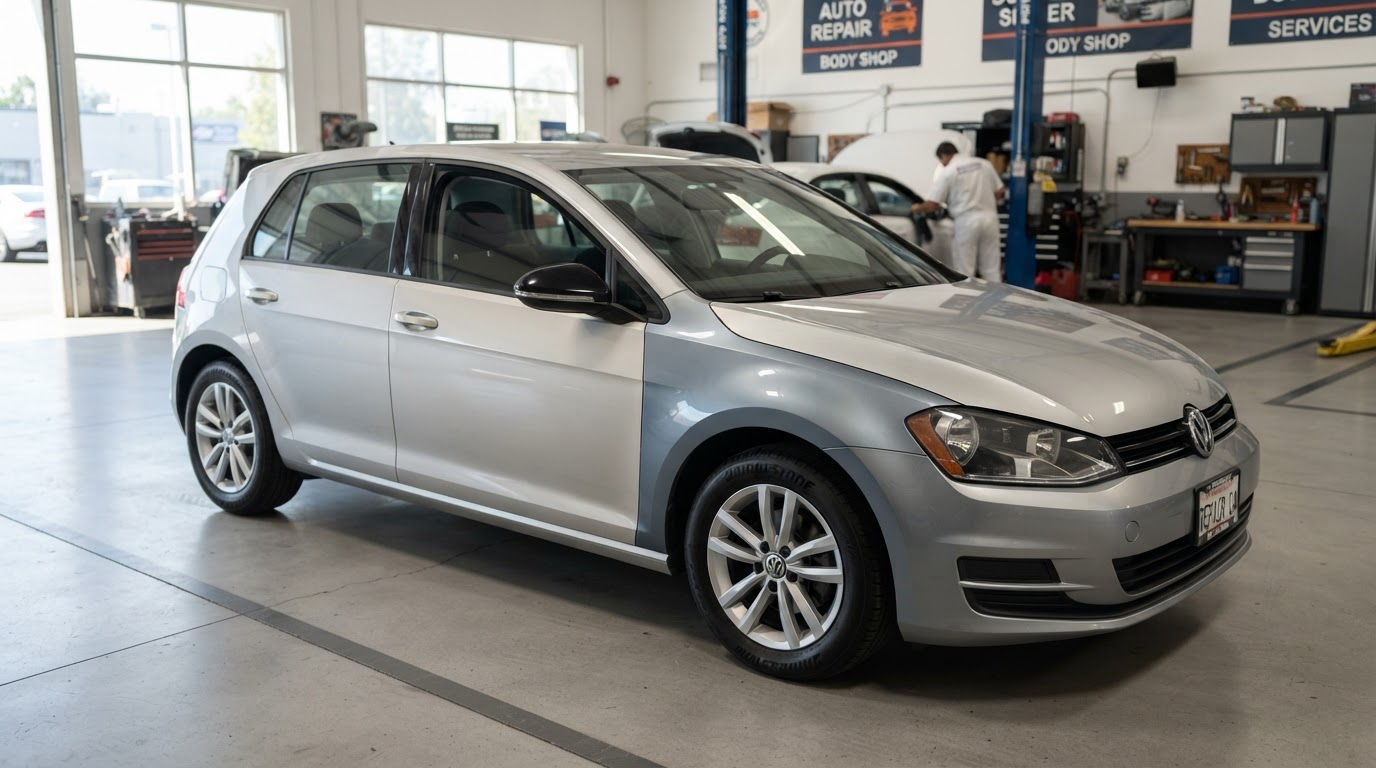
If your car's newly painted bumper, fender, or door looks noticeably different from the surrounding panels, the issue may involve color formulation, application technique, paint aging, or how the finish reflects light. A proper assessment can help determine whether the difference is expected or whether corrective refinishing may be appropriate.
A paint mismatch may be caused by:
- Factory color variations
- Paint aging and weathering
- Incorrect color variant selection
- Metallic or pearl orientation
- Application differences
- Lighting conditions
- Differences in panel materials
- Improper blending or refinishing
These are possible causes, not a diagnosis of any specific vehicle. This article explains what can contribute to a car paint mismatch after collision repair and what options may help. It does not guarantee a perfect match in every situation.
Why Doesn't My Car's New Paint Match the Original Color?
Automotive paint matching involves more than selecting a paint code. The color you see on a vehicle is the result of how the paint was formulated, how it was applied, how the existing finish has aged, and how the finished surface reflects light. A mismatch can come from any combination of those factors.
Key factors include:
- The vehicle's factory paint code
- Manufacturer color variants for the same code
- The existing paint's condition and age
- The application technique used during refinishing
- The finish characteristics of the repaired panel
- The lighting in which the paint is being viewed
Because these factors interact, two panels painted with the same formulation can still look slightly different. Understanding which factor is involved helps determine whether a mismatch is expected or whether corrective refinishing is appropriate.
Does the Factory Paint Code Guarantee a Perfect Match?
No. A factory paint code identifies a color family or a formulation reference, but it does not guarantee that the mixed paint will look identical to the paint already on the vehicle. Real-world variation can occur even when the code is correct.
Several things contribute to that variation. The original paint may have aged or faded since the vehicle was built. Manufacturers may use multiple color variants under the same code, and the variant on your vehicle may differ from the one a formula produces by default. The way the paint is applied and the conditions in the booth can also affect the final appearance.
This does not mean paint codes are unimportant — they are the starting point for any refinishing work. But identifying the correct color variant and accounting for the existing finish often matters as much as the code itself.
Why Does My Repainted Bumper Look Different From the Fender?
Bumpers and adjacent metal panels are often made from different materials. A bumper cover is typically a flexible plastic or composite, while a fender is usually metal. Paint can appear slightly different over different substrates, and the way light reflects off each surface can change how the color reads.
Application differences also play a role. Bumpers are often refinished separately from the surrounding panels, and the orientation of metallic or pearl flakes can vary between a vertical metal panel and a contoured bumper cover. Even factory-installed bumpers can exhibit some color variation compared with adjacent metal panels.
That does not mean every bumper mismatch is acceptable. When the difference is noticeable under normal lighting, a professional assessment can help determine whether the variation is expected or whether corrective refinishing may be appropriate.
Why Does Metallic Paint Look Different From Certain Angles?
Metallic paint contains small flakes that reflect light. The way those flakes are oriented in the paint film affects how the color appears. When flakes lay at different angles, the surface can look lighter, darker, or differently textured depending on your viewing position and the lighting.
This is why a repainted metallic panel can look close to the original from one angle and noticeably different from another. Small differences in application — such as spray distance, overlap, or the specific formulation used — can shift the flake orientation enough to be visible. The effect is a normal characteristic of metallic finishes, not necessarily a sign of a bad repair, but it can make matching more complex.
Why Is Pearl White Paint Difficult to Match?
Pearl or tri-coat finishes use multiple layers to create their appearance. A typical pearl system includes a base color, a pearl mid-coat that adds depth and a shifting effect, and a clear coat on top. Because the look depends on how each layer is applied, matching a pearl finish can be more involved than matching a solid color.
Small differences in the pearl layer — its concentration, coverage, or the number of coats — can change how the finish looks in direct light versus shade. Not every white vehicle uses a multi-stage pearl system, so the appropriate approach depends on the specific finish on your vehicle.
Can Sunlight Make a Paint Mismatch More Noticeable?
Yes. Paint that looks acceptable under indoor lighting or in shade can appear noticeably different in direct sunlight. The intensity and direction of light change how color and flake reflect off the surface, so a mismatch that is hard to see indoors can become obvious outside.
Evaluating a repaired vehicle in more than one lighting condition can be useful:
- Direct sunlight, which often reveals the most contrast
- Shade, which can hide or minimize subtle differences
- Indoor lighting, which may not show metallic or pearl shifts
- Several viewing angles, since flake orientation changes with position
Checking a vehicle in only one condition can make a mismatch easy to miss. Reviewing the finish under different lighting helps you understand what is actually there before deciding whether further work is needed.
What Is Paint Blending in Auto Body Repair?
Paint blending is a refinishing technique used when appropriate to transition new color into adjacent panels so the repair is less visible. Instead of painting one panel with a hard edge where the color stops, blending fades the color into the surrounding panels to reduce the visible contrast between new and existing paint.
The goal is to make a refinished panel blend with the rest of the vehicle rather than stand out as a separate repair. Whether blending is appropriate depends on the color, the panel location, the repair scope, and the applicable refinishing procedures for the vehicle. It is a professional technique, not something to attempt as a DIY fix.
Does Every Collision Repair Need Paint Blending?
No. Whether blending is needed depends on the vehicle, the color, the panel location, the repair scope, and the applicable refinishing procedures. Some repairs can be completed on a single panel without blending, while others benefit from blending into adjacent panels to reduce visible contrast.
Metallic and pearl finishes, certain colors, and repairs near panel edges are more likely to benefit from blending. Solid colors on isolated panels may not always require it. The appropriate approach is vehicle-specific, which is why blending is not universally required for every repair.
Can a Body Shop Fix Mismatched Paint?
Corrective options may be available depending on what caused the mismatch. A shop can evaluate the existing finish, review the color selection and refinishing quality, and determine whether repainting the affected panel, blending into adjacent panels, or another approach is appropriate.
Not every mismatch can be corrected through a simple polish. If the cause is a color formulation difference or an application issue, the fix often involves refinishing rather than surface buffing. The appropriate response depends on what is actually causing the visible difference on your vehicle.
Can Buffing or Polishing Fix a Paint Color Mismatch?
Polishing can address certain surface-finish issues — such as minor swirl marks, light scratches, or uneven gloss — but it does not change the underlying paint color formulation. If the mismatch is a true color difference rather than a surface defect, polishing alone will not correct it.
It helps to distinguish between:
- Color mismatch — the actual hue or tone differs between panels
- Gloss difference — one panel is shinier or duller than another
- Surface defects — texture, scratches, or contamination in the finish
Polishing may help with gloss and surface defects, but a color mismatch typically requires refinishing. Identifying which issue is present determines the appropriate response.
Does the Whole Car Need to Be Repainted?
No. A mismatch on one repaired panel does not automatically require repainting the entire vehicle. Localized refinishing of the affected panel, or blending into adjacent panels where appropriate, can often address the issue without repainting the whole car.
Full-vehicle repainting is typically reserved for situations such as widespread paint failure, a complete color change, or extensive damage across most panels. For a single mismatched panel, the more common approach is to refinish or blend the affected area. The appropriate scope depends on the specific situation.
What If My Car Paint Is Faded?
UV exposure, age, and previous refinishing can change how existing paint looks over time. Faded paint may not reflect color the same way it did when new, which can make a refinished panel look different from the surrounding panels even when the color formulation is correct.
Not all faded paint can be restored through polishing alone. In some cases, a faded finish can be improved with surface correction; in others, the existing paint has changed enough that matching it requires accounting for the aging in the refinishing plan. The right approach depends on the condition of the specific vehicle.
How Do Professional Body Shops Match Automotive Paint?
A general paint-matching process helps a shop choose a formulation and application method suited to the vehicle:
- Identify the factory paint code for the vehicle.
- Review available color variants for that code.
- Assess the current condition of the existing finish.
- Select an appropriate formulation, accounting for aging and variants.
- Evaluate the color appearance, including under different lighting.
- Apply suitable refinishing techniques, including blending where appropriate.
- Assess the finished appearance against the surrounding panels.
Specialized color-matching tools may be used where available to help refine the formulation. The process is designed to account for the factors that affect appearance, but it does not guarantee zero visible variation in every lighting condition.
What Should I Do If My Paint Doesn't Match After a Body Shop Repair?
If you notice a mismatch after a repair, the following steps can help you document and address the concern:
- Inspect the vehicle in appropriate lighting, including sunlight.
- Take clear photographs from several angles.
- Compare the repaired panel with adjacent original panels.
- Review the repair documentation and any refinishing details.
- Contact the original repair facility to discuss the concern.
- Request an explanation of the refinishing work performed.
- Obtain another professional assessment if necessary.
Approaching the shop with documentation and a clear description of what you see is usually more productive than assuming the work was wrong. Sometimes a concern can be resolved with a follow-up visit or additional refinement.
Will Insurance Pay to Correct a Paint Mismatch?
Whether insurance pays for corrective refinishing depends on the claim, the approved repair scope, your policy, the insurer's assessment, and the circumstances. If the mismatch relates to the original accident damage and the refinishing was part of the approved repair, coverage may apply. If the concern is about a prior unrelated repair, a different process may be involved.
Insurance payment for paint correction is not guaranteed. Confirm what is covered with your insurer, review the approved repair scope, and keep your claim number and communications. Documentation of the mismatch can help support a discussion about additional work.
How Much Does It Cost to Correct Mismatched Car Paint?
Correcting a paint mismatch does not have a single price because the work can range from minor color correction to refinishing multiple panels. The cost depends on these factors:
| Cost factor | What it affects |
|---|---|
| Number of affected panels | More panels mean more preparation, materials, and labor |
| Paint type | Solid, metallic, or pearl/tri-coat systems with different material and labor needs |
| Color complexity | Some colors require more formulation work or variants to match |
| Existing finish condition | Faded or aged paint may require additional matching work |
| Preparation requirements | Sanding, masking, and surface prep before refinishing |
| Refinishing labor | Application, clear coat, and cure time for the affected area |
| Blending requirements | Whether adjacent panels need to be blended for a less visible repair |
| Previous repair quality | Corrective work may require addressing an earlier refinishing issue |
Because these factors vary by vehicle and situation, an accurate cost requires an assessment of the specific car and the panels involved.
How Can I Reduce the Risk of Paint Mismatch Before Collision Repair?
You can reduce uncertainty by asking clear questions before authorizing refinishing work:
- How will the shop match my vehicle's specific color?
- Which color variants will be considered for my paint code?
- Will blending into adjacent panels be part of the repair?
- How will the finished appearance be evaluated?
- What happens if the color does not match after refinishing?
- How does the shop handle refinishing on bumpers versus metal panels?
No shop can guarantee zero visible variation in every lighting condition. Asking these questions before repairs begin helps you understand what to expect and how concerns would be handled if they arise.
Auto Body Paint Matching and Refinishing in Gardena, CA
Corner Collision Center is an auto body and collision repair shop in Gardena, California. Drivers in Gardena, the South Bay, and surrounding Los Angeles communities can contact the shop about collision-related paint damage, refinishing, and repair estimates.
Corner Collision Center
1311 W 130th St Unit 7
Gardena, CA 90247
Phone: (310) 678-5596
BAR ID: ARD 312893
Services include collision repair, paint matching and refinishing, bumper repair, fender repair, door and body panel repair, and insurance claim assistance. For related paint and panel topics, see our articles on a car scratched in a parking lot, fender repair vs. replacement, and sideswipe collision damage. To learn more about the shop's collision repair services, visit the collision repair page.
Concerned About Mismatched Car Paint? Get a Professional Assessment.
If a repaired bumper, fender, or door looks noticeably different from the surrounding paint, Corner Collision Center in Gardena can assess the finish and discuss appropriate refinishing options.
Frequently Asked Questions
Why doesn't my car's new paint match?
A paint mismatch can come from factory color variations, paint aging and weathering, the wrong color variant, metallic or pearl flake orientation, application differences, lighting conditions, differences in panel materials, or improper blending. Because several factors can be involved, an assessment of the specific vehicle helps identify the cause.
Does the factory paint code guarantee a match?
No. A paint code identifies a color family or formulation reference, but real-world variation can occur. Age, weathering, previous refinishing, and manufacturing differences all affect how the actual color appears. Paint codes are a useful starting point, but they do not guarantee an identical appearance on every vehicle.
Why does my bumper look darker than the fender?
Bumpers are often made from different materials than adjacent metal panels, and the way paint appears over those materials can differ. Application conditions and the flexibility of bumper covers can also affect how the color reads. Some variation between a bumper and a fender can be normal, but a noticeable mismatch may warrant assessment.
Is some bumper color variation normal?
Some degree of variation between a bumper and adjacent metal panels can be expected because of material differences. Not every bumper mismatch is a defect. When the difference is noticeable under normal lighting, a professional assessment can help determine whether it is within expected range or whether corrective refinishing may be appropriate.
Can mismatched car paint be fixed?
Corrective options may include re-evaluating the color formulation, refinishing the affected panel, or blending into adjacent panels. Whether a mismatch can be corrected depends on the cause, the existing finish, and the refinishing process. Not every mismatch can be fixed with a simple polish.
What is automotive paint blending?
Blending is a refinishing technique used when appropriate to transition new color into adjacent panels so the repair is less visible. It involves applying and fading the color into the surrounding panels rather than painting one panel with a hard edge. Blending is not required for every repair.
Does every repaint need blending?
No. Whether blending is needed depends on the vehicle, the color, the panel location, the repair scope, and applicable refinishing procedures. Some repairs can be completed on a single panel, while others may benefit from blending into adjacent panels. The appropriate approach is vehicle-specific.
Why is metallic paint difficult to match?
Metallic paint contains flake that reflects light differently depending on how it is oriented during application. The size and angle of the flake can change how the color appears from different viewing angles. Small differences in application can make a metallic panel look lighter, darker, or differently textured than the surrounding paint.
Why does pearl white paint look different?
Pearl or tri-coat finishes use multiple layers, including a pearl layer that affects color depth and appearance. Because the pearl effect depends on how each layer is applied, matching a pearl finish can be more complex than matching a solid color. Not every white vehicle uses a multi-stage pearl system.
Can sunlight reveal paint mismatch?
Yes. Paint that looks acceptable under indoor lighting or in shade can appear noticeably different in direct sunlight. Evaluating a repaired vehicle in more than one lighting condition and from several angles can help reveal whether a mismatch exists.
Can polishing fix mismatched paint?
Polishing can improve certain surface defects or gloss differences, but it does not change the underlying color formulation. If the mismatch is a color difference rather than a surface-finish issue, polishing alone will not correct it. The cause determines whether polishing or refinishing is the appropriate response.
Does the whole car need repainting?
No. A mismatch on one repaired panel does not automatically require repainting the entire vehicle. Localized refinishing or blending into adjacent panels may be appropriate depending on the color, panel location, and repair scope.
Can faded paint affect color matching?
Yes. UV exposure, age, and previous refinishing can change how existing paint looks, which can affect how new paint matches the surrounding panels. Faded paint may not reflect color the same way it did when new, and not all faded paint can be restored through polishing alone.
How do body shops match paint colors?
A general process involves identifying the factory paint code, reviewing available color variants, assessing the current vehicle finish, selecting an appropriate formulation, evaluating color appearance, applying suitable refinishing techniques, and assessing the finished result. Specialized color-matching tools may be used where available.
Will insurance cover paint correction?
Whether insurance covers paint correction depends on the claim, the approved repair scope, your policy, the insurer's assessment, and the circumstances. Insurance payment for corrective refinishing is not guaranteed. Confirm what is covered with your insurer before authorizing additional work.
How much does correcting paint mismatch cost?
Cost depends on the number of affected panels, the paint type, color complexity, existing finish condition, preparation requirements, refinishing labor, blending requirements, and the quality of the previous repair. Because these factors vary by vehicle and situation, an accurate cost requires an assessment of the specific car.
What should I do if a body shop's paint doesn't match?
Inspect the vehicle in appropriate lighting, take clear photographs, compare the repaired panel with adjacent panels, review the repair documentation, and contact the original repair facility to request an explanation of the refinishing work. If the concern is not resolved, obtain another professional assessment.
Where can I get automotive paint refinishing in Gardena?
Corner Collision Center, located at 1311 W 130th St Unit 7, Gardena, CA 90247, provides collision repair, paint matching and refinishing, bumper repair, fender repair, door and body panel repair, and insurance claim assistance. Call (310) 678-5596 to request a paint repair estimate.