Headlight Broken After an Accident: Repair, Replacement, and Hidden Damage
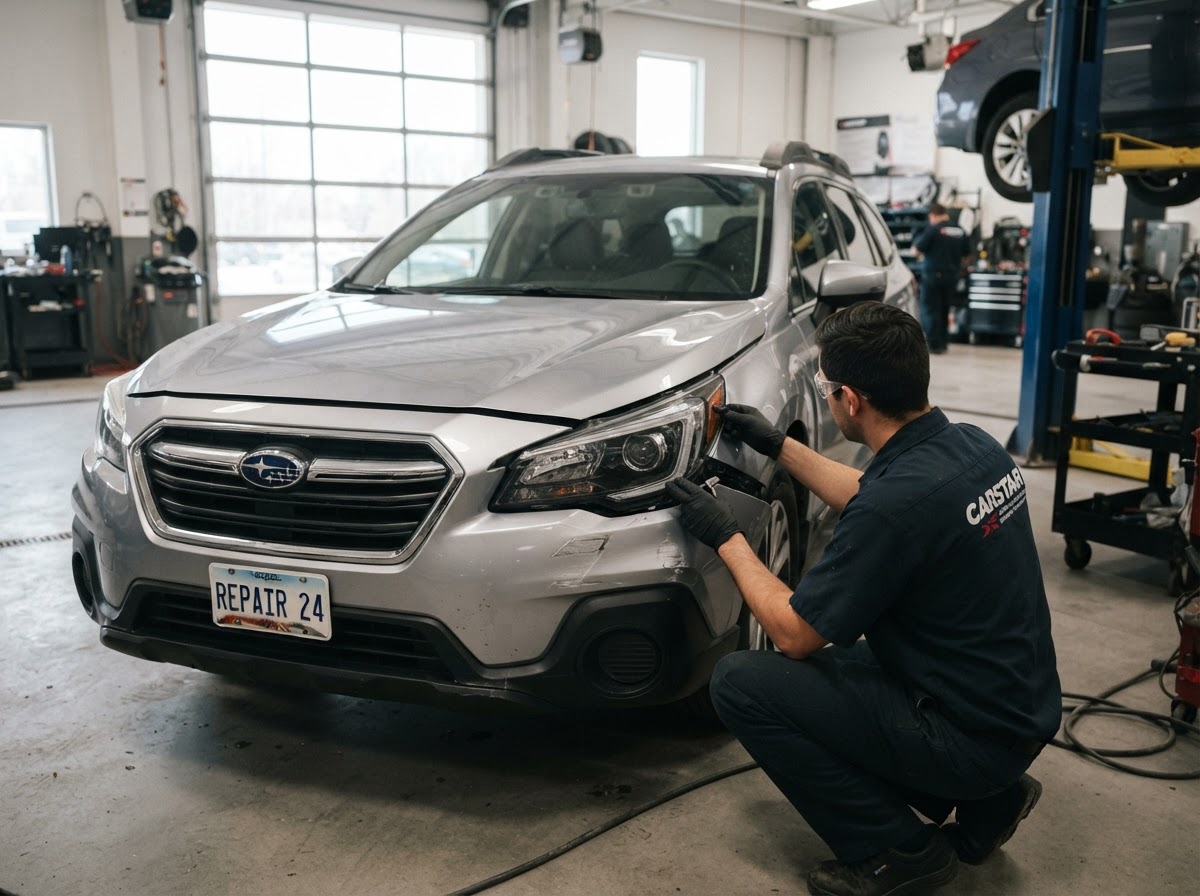
If your headlight cracked, shifted, or stopped working after an accident, replacing the bulb may not solve the problem. A collision can damage the headlight lens, housing, mounting brackets, wiring, or surrounding body panels. The correct repair depends on which components were affected and the vehicle manufacturer's requirements.
After a collision, headlight damage may involve:
- Cracked lens or housing
- Broken mounting tabs
- Damaged bulbs or lighting modules
- Loose electrical connections
- Misaligned headlight assembly
- Damaged bumper or fender mounting areas
- Other front-end collision damage
These are possible causes, not confirmed diagnoses of any specific vehicle. This article explains how a broken headlight after an accident is evaluated and what can affect the repair. It does not diagnose your vehicle remotely.
Can a Broken Headlight Be Repaired After an Accident?
Sometimes. Whether a headlight broken after an accident can be repaired depends on how the assembly is built, where the damage is located, and what the vehicle manufacturer allows. A headlight is not a single interchangeable part — it is an assembly made up of several components that can each be affected differently by an impact.
Repairability depends on factors such as:
- Headlight construction and design
- Damage location and severity
- Housing condition
- Lens condition
- Mounting points and tabs
- Electrical components inside the assembly
- Vehicle-specific manufacturer repair procedures
Some damage is serviceable; other damage is not. A cracked lens may be a serviceable component on one vehicle but part of a sealed, nonserviceable assembly on another. The appropriate repair follows the manufacturer's procedures rather than a universal rule, so not every cracked lens or broken mounting tab can be repaired.
When Does a Headlight Need Replacement?
Headlight replacement may be considered when the damage affects the structural integrity or function of the assembly. Situations where replacement may be necessary include:
- Significant housing damage
- A cracked or compromised lens that cannot be repaired according to manufacturer procedures
- Broken mounting areas that cannot be restored
- Internal lighting damage
- Water intrusion into the assembly
- Damaged integrated electronics
- Nonserviceable components
These situations do not establish universal rules for all vehicles. Some assemblies are designed as sealed units where a damaged component requires replacing the whole assembly, while others allow targeted component replacement. What is appropriate depends on the specific headlight design and the manufacturer's repair procedures.
Headlight Repair vs. Replacement: What's the Difference?
The difference between repairing and replacing a headlight comes down to whether the existing assembly is retained or a new assembly is installed. The table below summarizes how the two approaches generally differ.
| Factor | Repair | Replacement |
|---|---|---|
| Existing assembly | Retained where appropriate | Replaced |
| Damage type | Limited, repairable components | Damage requiring a new assembly or components |
| Parts | May involve serviceable parts | May involve a complete assembly |
| Labor | Depends on access and damage | Depends on installation requirements |
| Adjustment | May be required | May be required |
| Cost | Vehicle-specific | Vehicle-specific |
A replacement assembly still needs to be installed correctly and aimed so the beam points where it should. Replacing a headlight does not eliminate the need for proper alignment — it may require the same attention to aiming as a repair.
What If Only the Headlight Lens Is Cracked?
A cracked headlight lens can compromise the headlight's sealing and performance. The lens helps keep moisture and debris out of the housing, and a crack can allow water to enter, reduce light output, or scatter the beam in unintended directions.
Some headlights have serviceable lens or cover components that can be addressed according to manufacturer procedures. Others are built as sealed assemblies where a cracked lens means replacing the whole unit. The appropriate option depends on how the headlight is designed.
A cracked lens should not be sealed with household adhesives or tape as a permanent repair. Those materials are not designed for automotive lighting exposure, can degrade over time, and may not restore the headlight's sealing, beam pattern, or appearance. A professional assessment helps determine the appropriate response for the specific assembly.
What If the Headlight Housing Is Broken?
The housing is the structure that supports and protects the headlight's internal components. It holds the lens in place, secures the assembly to the vehicle, and helps keep moisture out. When the housing is broken, the effects can extend beyond the visible crack.
Housing damage may affect:
- Mounting — the assembly may no longer attach securely
- Weather sealing — moisture and debris can enter the housing
- Light direction — internal components may shift out of position
- Internal components — bulbs, reflectors, or modules may be affected
Whether a broken housing can be repaired depends on the assembly design and the manufacturer's procedures. On some vehicles a housing component is serviceable; on others the housing is part of a sealed unit that requires replacement.
Can Broken Headlight Mounting Tabs Be Repaired?
Some manufacturers provide approved repair solutions for certain broken mounting tabs, such as specific brackets or repair kits designed for that purpose. In those cases a tab may be restored according to the manufacturer's procedure.
Other tab damage may not be repairable within the manufacturer's requirements and may require assembly replacement. Not all tabs can be glued, welded, or repaired — an adhesive or plastic-weld repair that is not part of an approved procedure may not hold up to heat, vibration, or the loads the headlight sees in use. The appropriate option depends on the specific vehicle and the manufacturer's procedures.
Why Is My Headlight Loose After an Accident?
A loose headlight usually means something that should hold the assembly firmly in place is no longer doing its job. After a collision, possible causes include:
- Broken brackets
- Damaged mounting tabs
- Shifted bumper components
- Fender mounting damage
- Headlight support damage
A loose assembly is more than a nuisance. Movement can affect beam aim, stress the remaining mounting points, and allow moisture into the housing. Because the cause can involve components behind the bumper or fender, a loose headlight should be professionally assessed rather than tightened in place.
Why Is My Headlight Pointing in the Wrong Direction?
If a headlight is pointing in the wrong direction after an accident, the cause can range from a simple aiming adjustment to physical damage that changed the mounting geometry. It helps to distinguish between:
- Headlight aiming adjustment — the assembly is intact but the beam needs to be aimed
- Damaged mounting components — a bracket or tab has shifted or broken, changing where the assembly sits
- Misaligned surrounding body panels — the bumper, fender, or hood mounting has moved, affecting how the headlight fits
Adjustment alone cannot correct every physical mounting problem. If the assembly is sitting in the wrong position because a mounting point has moved, aiming the beam will not restore proper fit. Identifying which issue is present determines whether aiming, component repair, or panel alignment is the appropriate response.
Can a Minor Collision Cause Hidden Damage Behind a Headlight?
Some front-corner collisions can affect components that are not visible from outside the vehicle. The area behind and around a headlight can include several structures and connections, including:
- Mounting brackets
- Fender supports
- Bumper attachments
- Wiring
- Headlight supports
- Adjacent structural areas
This does not mean hidden damage is always present after a minor collision. Many low-speed impacts affect only exterior panels. But because some components sit behind the headlight, a professional assessment can help determine whether anything beneath the surface was affected. For more on related front-end damage, see our article on front-end collision damage.
What If My Headlight Stopped Working After an Accident?
If a headlight stopped working after an accident, the cause can involve the bulb, the lighting module, the wiring, the connectors, or a control unit. Physical damage from the collision can break a bulb, disconnect a harness, or damage a component inside the assembly.
Possible issues include:
- Broken or blown bulbs
- Damaged LED modules
- Broken or pinched wiring
- Disconnected or damaged connectors
- Affected control units
- Physical damage to the assembly
Electrical diagnosis is best left to a qualified technician. This article does not provide electrical repair instructions. A professional assessment can identify what is preventing the headlight from operating.
Why Is There Moisture Inside My Headlight After a Collision?
A small amount of temporary condensation can occur in some headlights after temperature changes and may clear on its own. Persistent moisture or standing water inside the housing is different — it usually means the assembly's sealing has been compromised.
A collision can contribute to moisture problems through cracks in the lens or housing, damaged seals, or a misaligned assembly that no longer seals against the body. When the seal is broken, water can enter and collect, which can affect lighting performance and internal components over time.
Not every instance of condensation means the headlight must be replaced. Temporary condensation that clears on its own is different from a recurring water-intrusion problem. A professional assessment can help determine whether the moisture is a normal condition or a sign that the assembly needs repair or replacement.
Are LED Headlights More Complicated to Repair?
LED headlights can be more complex because some LED assemblies contain integrated components that may not be individually serviceable. Rather than a replaceable bulb, the light source can be built into the assembly, so a failed LED module may require replacing part or all of the unit.
Repair requirements and costs can vary significantly by vehicle. Some LED headlights allow board or module-level service according to manufacturer procedures; others are sealed units where a damaged component means replacing the entire assembly. This does not mean every LED headlight requires full replacement — the appropriate repair depends on the specific assembly and the manufacturer's procedures.
What About Adaptive Headlights and Automatic Leveling Systems?
Certain vehicles are equipped with adaptive lighting, automatic leveling mechanisms, or related electronic systems. These features can adjust beam direction or range based on speed, steering, or load. When a headlight with these systems is damaged or replaced, the repair may involve vehicle-specific procedures beyond the physical installation.
Where applicable, collision repair may require aiming, initialization, or calibration to restore proper system operation. Not every headlight requires electronic calibration — the requirements depend on the vehicle's equipment and the manufacturer's procedures. Following the vehicle-specific procedures helps ensure the system works as intended after repair.
Can a Broken Headlight Affect Other Safety Features?
Some vehicles have lighting-related sensors or systems integrated with other vehicle functions. Depending on the vehicle, components near or integrated with the headlight may be connected to other systems, so damage in that area can be more involved than it appears.
This does not mean every damaged headlight affects ADAS (advanced driver assistance systems). Whether other systems are involved depends on the vehicle's design, the impact location, and the components affected. Vehicle-specific manufacturer requirements should guide the inspection and repair so that any related systems are addressed appropriately.
Can I Drive With a Broken Headlight in California?
Vehicle lighting in California must meet applicable requirements. Generally, vehicles are required to be equipped with working headlights that illuminate the road ahead. A headlight that does not function may not meet those requirements. Verify current rules with the California Vehicle Code and official sources rather than relying on this article.
Beyond legal requirements, practical safety concerns matter. Reasons to avoid driving include:
- A headlight that is not functioning
- A loose assembly that could shift or detach
- A beam pointing in the wrong direction
- Sharp edges or detached components
- Exposed wiring
- Damage affecting other vehicle systems
Not every cosmetic lens crack automatically makes a vehicle illegal to drive — whether a vehicle meets lighting requirements depends on the specific condition and applicable rules. But when lighting is inadequate or the vehicle's safe operation is uncertain, it is best to avoid driving and arrange appropriate assistance. For more on this topic, see our article on whether a car is safe to drive after an accident.
How Much Does Headlight Repair or Replacement Cost After an Accident?
Headlight repair or replacement cost varies widely because headlight assemblies differ dramatically between vehicles. Rather than a single price, the cost depends on the following factors:
| Cost factor | What it affects |
|---|---|
| Vehicle make/model | Different vehicles use different assemblies at different price points |
| Lighting technology | Halogen, HID, or LED systems have different parts and labor requirements |
| Adaptive lighting features | Adaptive or leveling systems may add aiming or calibration procedures |
| Assembly design | Sealed units versus serviceable components affect whether a component or full assembly is needed |
| Mounting damage | Broken brackets or tabs can add repair or replacement work |
| Wiring or electronics | Damaged wiring, connectors, or modules add diagnosis and repair work |
| Replacement parts | Part type and availability affect cost and timeline |
| Labor | Removal, installation, and related access time |
| Headlight aiming | Proper beam alignment after repair or replacement |
| Related bumper/fender damage | Adjacent panel repair or alignment that affects the headlight fit |
Because these factors vary by vehicle and situation, an accurate cost requires an assessment of the specific car and the damage present. This article does not provide dollar estimates.
Will Insurance Cover a Broken Headlight After an Accident?
Whether insurance covers a broken headlight depends on the applicable policy, the accident circumstances, liability, your deductible, the documentation, and the insurer's review of the claim. If the headlight damage resulted from a covered collision, it may be included in the approved repair scope — but coverage is not guaranteed.
Confirm what is covered with your insurer, keep your claim information and documentation, and review the approved repair scope. The insurer's determination and your policy terms control what is paid.
What If the Insurance Estimate Doesn't Include Headlight Mounting Damage?
An initial insurance estimate may not include every damaged component. Damage to headlight mounting brackets, tabs, wiring, or surrounding structures may not be visible until the vehicle is assessed more closely or partially disassembled. When additional accident-related damage is identified, a repair facility may document it through a supplemental estimate for the insurer's review.
The supplemental process allows the shop to request additional repair work, but it does not guarantee approval. For more on how this works, see our article on an insurance estimate being lower than the body shop estimate.
How Does a Collision Repair Shop Assess Headlight Damage?
A general professional assessment helps identify what was affected and what the repair should involve:
- Inspect visible headlight damage.
- Examine mounting points and tabs.
- Check surrounding bumper and fender alignment.
- Identify damaged electrical components where applicable.
- Review vehicle-specific manufacturer repair procedures.
- Determine repair or replacement requirements.
- Identify any necessary aiming or related procedures.
- Prepare a repair estimate.
Not every vehicle requires the same level of assessment, and specialized lighting operations — such as ADAS calibration or detailed electronic diagnosis — may be handled according to the vehicle's requirements. An assessment identifies the appropriate scope for the specific vehicle and damage.
Headlight and Front-End Collision Repair in Gardena, California
Corner Collision Center is an auto body and collision repair shop in Gardena, California. Drivers in Gardena, the South Bay, and surrounding Los Angeles communities can contact the shop for collision damage assessments and repair estimates, including damage that involves the headlight, bumper, or fender area.
Corner Collision Center
1311 W 130th St Unit 7
Gardena, CA 90247
Phone: (310) 678-5596
BAR ID: ARD 312893
Services include collision repair, bumper repair, fender repair, paint matching and refinishing, structural/frame repair, and insurance claim assistance. For related front-end and panel topics, see our articles on front-end collision damage and fender repair vs. replacement. To learn more about the shop's collision repair services, visit the collision repair page.
Headlight Damaged in an Accident? Get the Front-End Damage Assessed.
A broken or misaligned headlight can involve more than the visible lens. Corner Collision Center in Gardena can assess collision-related body damage and help explain the appropriate repair options for your vehicle.
Frequently Asked Questions
Can a cracked headlight be repaired?
Sometimes. Whether a cracked headlight can be repaired depends on the assembly design, the damage location, and the vehicle manufacturer's procedures. Some headlights have serviceable lens or cover components; others are sealed units where a cracked lens requires replacing the whole assembly. A professional assessment helps determine the appropriate option for the specific vehicle.
Does a broken headlight need full replacement?
Not always. Replacement may be necessary for significant housing damage, a compromised lens that cannot be repaired per manufacturer procedures, broken mounting areas, internal damage, water intrusion, or damaged integrated electronics. But some damage can be repaired. Whether replacement is needed depends on the assembly design and the manufacturer's repair procedures.
Can a headlight lens be replaced separately?
On some vehicles the lens or a cover component is serviceable and can be addressed separately. On others the lens is part of a sealed assembly and cannot be replaced without replacing the whole unit. Whether a lens can be replaced separately depends on how the headlight is designed for the specific vehicle.
Can broken headlight mounting tabs be repaired?
Some manufacturers provide approved repair solutions for certain mounting tabs, such as specific brackets or repair kits. Other tab damage is not repairable within the manufacturer's requirements and requires assembly replacement. Not all tabs can be glued or welded, so the appropriate option depends on the vehicle and the manufacturer's procedures.
Why is my headlight loose after an accident?
A loose headlight usually means a component that should hold the assembly in place has been affected. Possible causes include broken brackets, damaged mounting tabs, shifted bumper components, fender mounting damage, or headlight support damage. Because the cause can involve components behind the bumper or fender, a loose headlight should be professionally assessed.
Why is my headlight misaligned?
A misaligned headlight can result from a simple aiming need, damaged mounting components that changed the assembly's position, or misaligned surrounding body panels. Adjustment alone cannot correct every physical mounting problem. Identifying which issue is present determines whether aiming, component repair, or panel alignment is appropriate.
Can a minor collision damage headlight brackets?
A minor front-corner collision can affect mounting brackets, fender supports, bumper attachments, wiring, or headlight supports that are not visible from outside. This does not mean hidden damage is always present, but a professional assessment can help determine whether anything beneath the surface was affected.
Why did my headlight stop working after an accident?
A headlight that stopped working after an accident may involve a broken or blown bulb, a damaged LED module, broken or pinched wiring, a disconnected or damaged connector, an affected control unit, or physical damage to the assembly. Electrical diagnosis is best handled by a qualified technician rather than attempted as a DIY repair.
Can collision damage cause moisture inside a headlight?
Yes. A collision can crack the lens or housing, damage seals, or misalign the assembly so it no longer seals against the body, allowing water to enter. Temporary condensation that clears on its own is different from recurring water intrusion. A professional assessment can help determine whether the moisture is normal or a sign of damage.
Are LED headlights expensive to replace?
LED headlight replacement cost varies significantly by vehicle. Some LED assemblies contain integrated components that are not individually serviceable, so a failed module may require replacing part or all of the unit. Not every LED headlight requires full replacement. Cost depends on the assembly design, parts, labor, and any aiming or calibration requirements.
Do adaptive headlights need calibration after replacement?
Where applicable, vehicles with adaptive lighting or automatic leveling may require aiming, initialization, or calibration after a headlight is repaired or replaced. Not every headlight requires electronic calibration — the requirements depend on the vehicle's equipment and the manufacturer's procedures.
Can I drive with a cracked headlight in California?
Vehicle lighting in California must meet applicable requirements, and a vehicle generally needs working headlights. Not every cosmetic lens crack automatically makes a vehicle illegal to drive, but a headlight that does not function, is loose, points the wrong direction, or has exposed wiring creates safety concerns. When lighting is inadequate or safe operation is uncertain, it is best to avoid driving. Verify current rules with the California Vehicle Code and official sources.
How much does headlight replacement cost?
Headlight replacement cost depends on the vehicle make and model, the lighting technology (halogen, HID, or LED), adaptive lighting features, the assembly design, mounting damage, wiring or electronics, replacement parts, labor, aiming, and related bumper or fender damage. Because these factors vary widely, an accurate cost requires an assessment of the specific vehicle.
Will insurance cover headlight damage?
Coverage depends on the applicable policy, the accident circumstances, liability, your deductible, the documentation, and the insurer's review. If the headlight damage resulted from a covered collision, it may be included in the approved repair scope, but coverage is not guaranteed. Confirm what is covered with your insurer.
What if insurance misses hidden headlight damage?
An initial insurance estimate may not include every damaged component, especially damage that is not visible until the vehicle is assessed more closely or partially disassembled. When additional accident-related damage is identified, a repair facility may document it through a supplemental estimate for the insurer's review. Approval is not guaranteed.
Can a damaged bumper affect headlight alignment?
Yes. The bumper, fender, and headlight share mounting areas at the front of the vehicle. If a collision shifted the bumper or fender, it can affect how the headlight fits and where the beam points. That is why a loose or misaligned headlight is often assessed together with the surrounding panels.
How long does headlight collision repair take?
The timeline depends on the damage scope, whether repair or replacement is required, parts availability, any wiring or electronic diagnosis, aiming or calibration needs, and related bumper or fender work. An assessment of the specific vehicle helps provide a more accurate timeframe. For general repair timelines, see our article on how long collision repair takes.
Where can I get front-end collision repair in Gardena?
Corner Collision Center, located at 1311 W 130th St Unit 7, Gardena, CA 90247, provides collision repair, bumper repair, fender repair, paint matching and refinishing, structural/frame repair, and insurance claim assistance. Call (310) 678-5596 to request a collision repair estimate for headlight or front-end damage.